“Explore the top 7 roles of a Community Health Nurse in family health services and the importance of managing family health records for improved healthcare outcomes.”
The roles of a Community Health Nurse in family health services are pivotal in maintaining the overall well-being of families. From coordinating care to educating family members, the nurse plays multiple key roles, all while managing comprehensive family health records to ensure proper care delivery.
Table of Contents
Roles of Community Health Nurse in Family Health Services:
- Coordinator of Primary Health Care Services:
The community health nurse plays a key role in coordinating services for families. She connects them with healthcare professionals. These professionals include doctors, nutritionists, social workers, dentists, AYUSH specialists, and others. She ensures the family receives comprehensive and timely care by managing these connections. - Provider of Primary Health Care Services:
The community health nurse delivers direct care within legal and professional limits. She must adhere to nursing ethics, regulations, and protocols while providing treatment. Additionally, the nurse stays updated on clinical protocols to ensure she provides accurate and effective care. - Educator of Family Nursing Care:
The community health nurse serves as an educator. She teaches families how to provide care for their members. This involves demonstrating and supervising nursing tasks so that family members can perform them when the nurse is absent. She also monitors the care provided to ensure it meets required standards. - Facilitator for the Family:
In this role, the community health nurse assists families by making healthcare processes easier. She uses her knowledge to guide families through resources, like explaining services offered by NGOs and referral pathways. - Advocate for the Family:
As an advocate, the community health nurse speaks in support of the family’s health needs. She promotes conditions that help the family’s health and opposes harmful influences. Additionally, she encourages the implementation of public health laws and environmental protection policies. - Care Planner:
The community health nurse participates in planning family health management alongside an integrated healthcare team. She helps design care plans and ensures that family health management is structured for effective outcomes. - Change Agent:
The community health nurse acts as a change agent. She influences family health by promoting new ideas. These ideas or actions lead to positive changes. She helps adjust environmental and behavioral factors to improve the family’s health status.
These roles are interconnected, with each contributing to the overall goal of improving family health through comprehensive and proactive care.
Family Health Records
- Definition & Importance:
Family health records are essential in providing comprehensive care to all family members. They store health information, risk factors, illnesses, health behaviors, services provided, and future care planning. - Purpose of Family Health Records:
- Baseline Planning: Helps in planning family health services by providing a starting point.
- Improves Care: Offers factual details about care already provided.
- Communication Tool: Facilitates communication among healthcare providers.
- Identifies Issues: Provides data to detect and address current and potential health problems.
- Evaluation: Helps assess the health status of family members and the effectiveness of care.
- Research: Supplies data for nursing and healthcare research.
- Types of Family Health Records:
- Family Folders: Comprehensive health records of all family members, including:
- Identification data (age, education, occupation, etc.)
- Social deficits (widow/widower, disabled members)
- Nutritional status and deficiencies
- Socio-economic and cultural details
- Past medical history, immunizations
- Present health concerns, contraceptive use, risk factors (environment, sanitation, etc.)
- Cumulative Records: Long-term records maintained over time, such as:
- Pregnancy records (from conception to preschool)
- Chronic conditions (HIV, hypertension, etc.)
- Nurse-family interactions during care sessions
- Process Recording:
A method to document nurse-family interactions, noting: - Actions taken by the nurse and family members
- Reactions of family members
- Special situations that occur during contact
This helps in evaluating family health progress and improving care strategies. - Family health records are vital for patient care, communication, and future health planning, benefiting individuals, families, and the healthcare system.
Courses
-
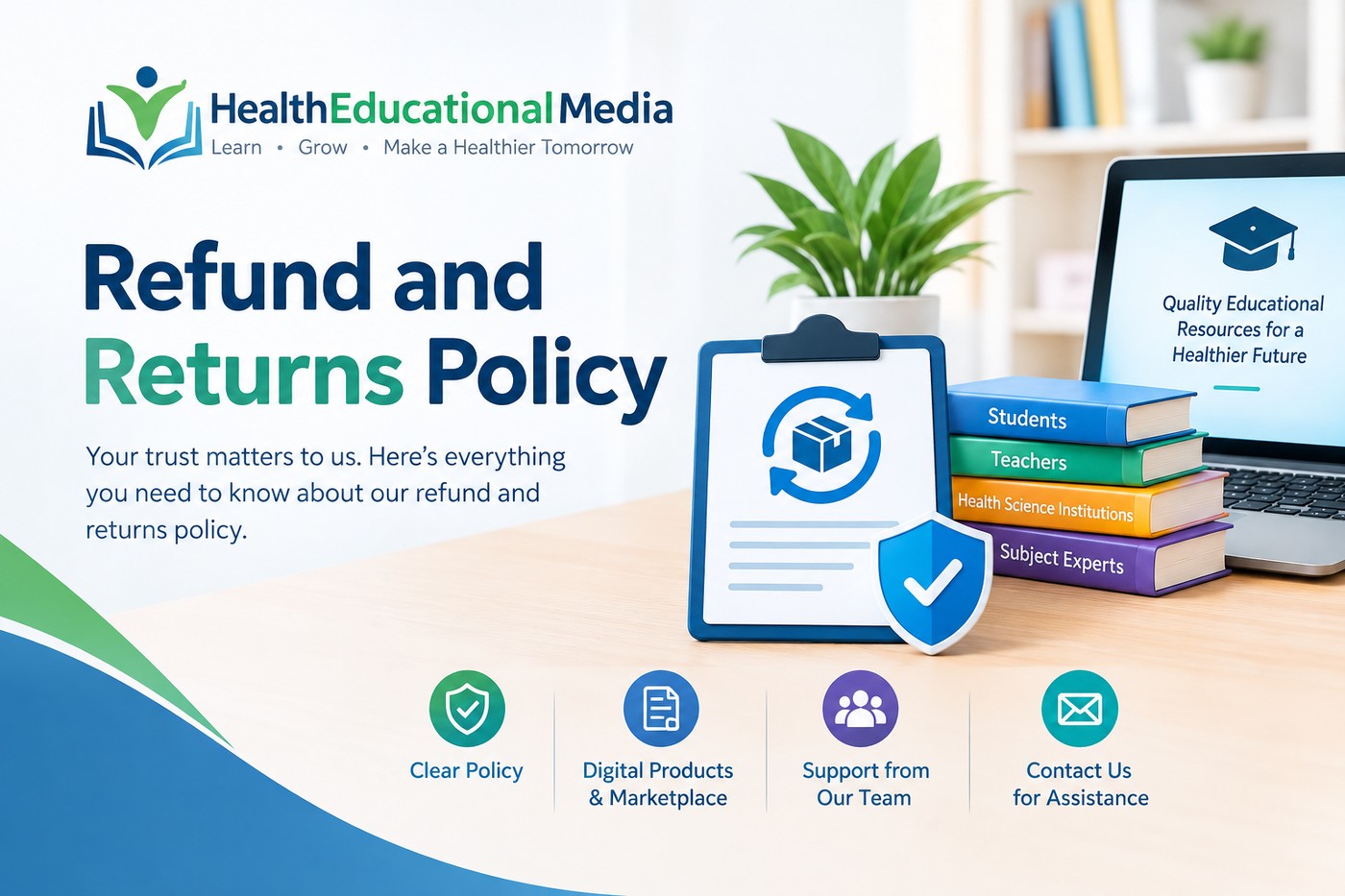
Refund and Returns Policy
Last updated: September 21, 2026 Thank you for using Health Educational Media (“we,” “us,” “our,” or the “Platform”). Health Educational Media is an educational website and multi-seller marketplace providing health-related educational articles, news and updates, and educational materials for students, teachers, educators, and health science institutions. Our marketplace includes educational products created and offered by…
-
Enquirey Forms
Share this post WhatsApp Facebook Telegram Twitter / X LinkedIn Email Copy link
-
Vendor Onboarding
Share this post WhatsApp Facebook Telegram Twitter / X LinkedIn Email Copy link
-
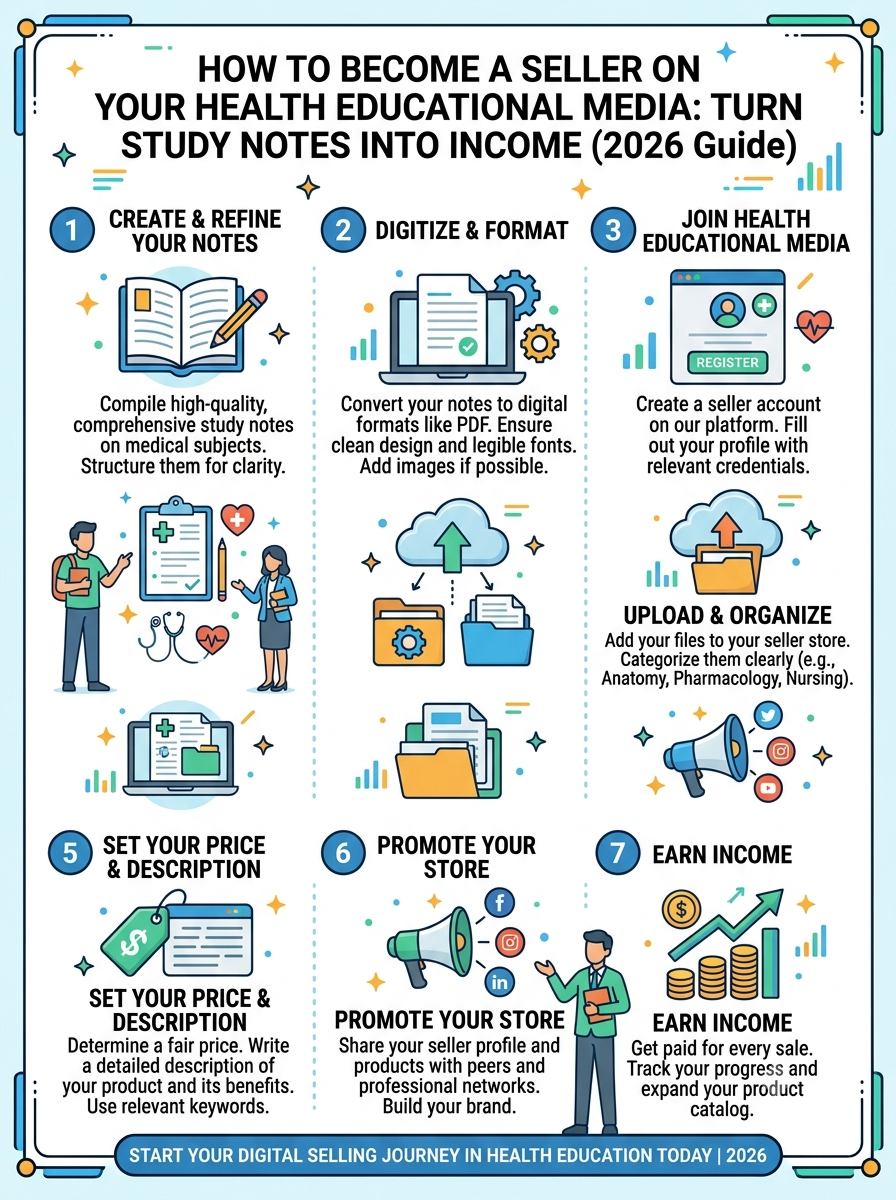
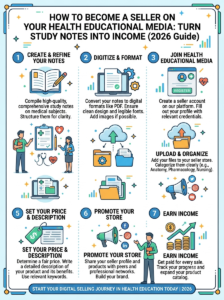
How to Become a Seller on Health Educational Media: Turn Your Study Notes into Income (2026 Guide)
Complete guide to becoming a vendor on Health Educational Media — who can sell (students, faculty, healthcare professionals), what to sell, exact commission structure (90% to you, 10% platform), step-by-step onboarding, quality standards, and honest earning expectations. No fluff, straight answers.
-
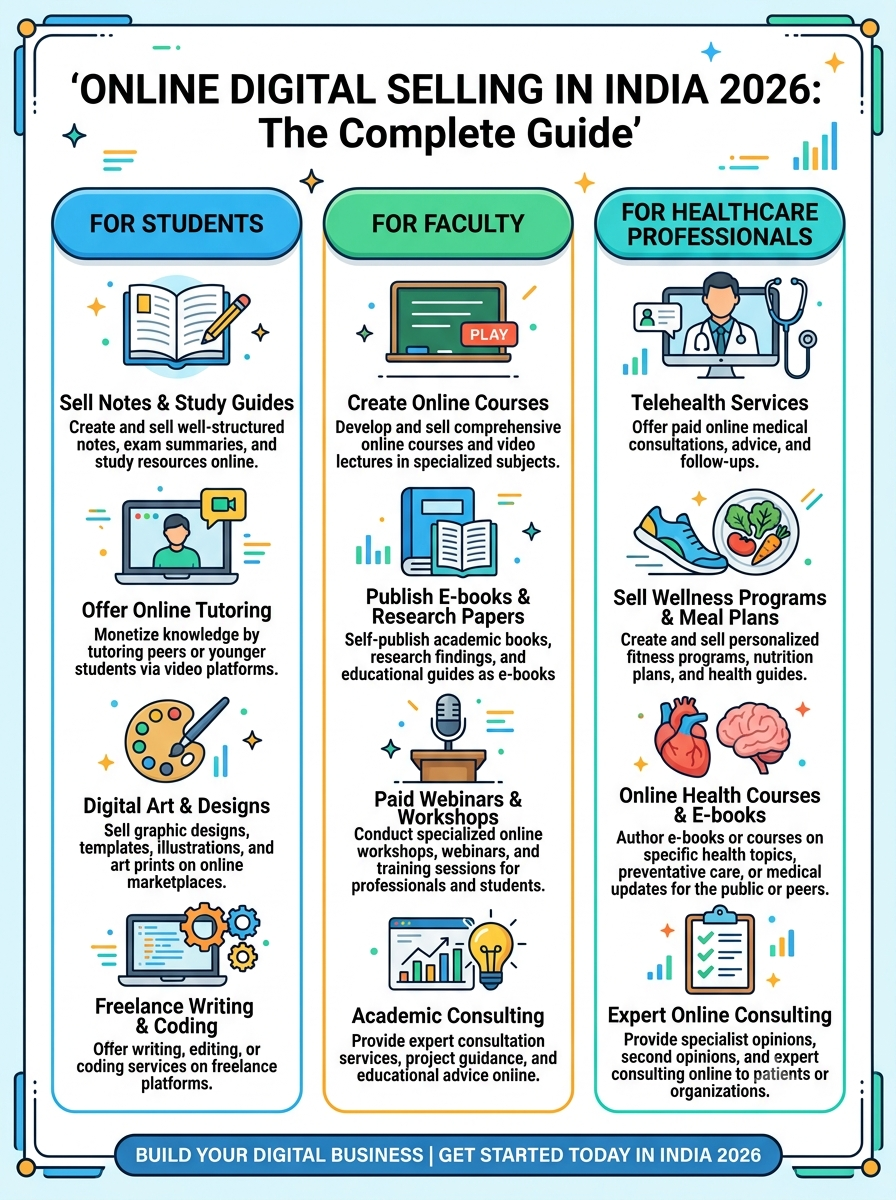
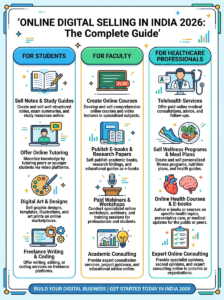
Online Digital Selling in India 2026: The Complete Guide for Students, Faculty & Healthcare Professionals
India’s digital commerce market crossed USD 185 billion in 2026. This guide explains how students, faculty, and healthcare professionals can start selling online — with real market data, government policies (Digital India, ONDC, MSME Udyam), GST rules, income tax under Section 44ADA, and a step-by-step launch plan.
-

HEALTH PLANNING, POLICIES AND PROBLEMS – INDEX
Get simplified nursing notes on India’s health planning, policies, and health-related challenges. Ideal for B.Sc and GNM students in Community Health Nursing.
- How to Become a Seller on Health Educational Media: Turn Your Study Notes into Income (2026 Guide)
- Online Digital Selling in India 2026: The Complete Guide for Students, Faculty & Healthcare Professionals
- HEALTH PLANNING, POLICIES AND PROBLEMS – INDEX

- Top Health Committees & Planning in India: Powerful Nursing Notes (2024)
- Top Global Organizations Powering Community Health Nursing Success